

Palatability | September 17, 2026
Petfood palatability: Why amount eaten under-measures liking
We measure too little, we discard too much, and we sometimes infer more than the measurement can support.

A family finishes a good dinner and carries the plates to the kitchen. Someone scrapes the last of the bones into a bowl and steps out to the kennel, where two dogs have heard the door and are already on their feet. The bones go over the fence. What follows is not dignified. There is a scramble, a scattering, a low warning growl, a snatched femur carried off at speed and defended against a sibling who wants it more than anything in the world. To watch them is to be in no doubt at all. The dogs love these bones.
Now move a few hundred kilometres to a room where the same enthusiasm is being manufactured on purpose. A commercial food has been developed, refined and tested to the point of exhaustion, precisely to predict that dogs will eat it eagerly and come back for more. And when the trial runs, they do. The bowls come back empty. The numbers are excellent. The food, by every measure the room can produce, is a success.
Both scenes end the same way. An empty vessel and an animal that ate what was there. On the record they look identical, and that is exactly the difficulty. The dogs may truly love those bones. But the scene at the fence cannot tell us how much of what we are watching belongs to the bones themselves, how much to hunger, how much to the brother competing for the same femur, and how much to the simple fact that food has suddenly appeared. If ravening for scraps and clearing a tested bowl leave the same trace, then the trace is holding more than one cause and telling us less than we think. Somewhere underneath the grams eaten is a question the grams cannot answer on their own.
What exactly did we measure?
❦
Movement I · THE EMPTY BOWL
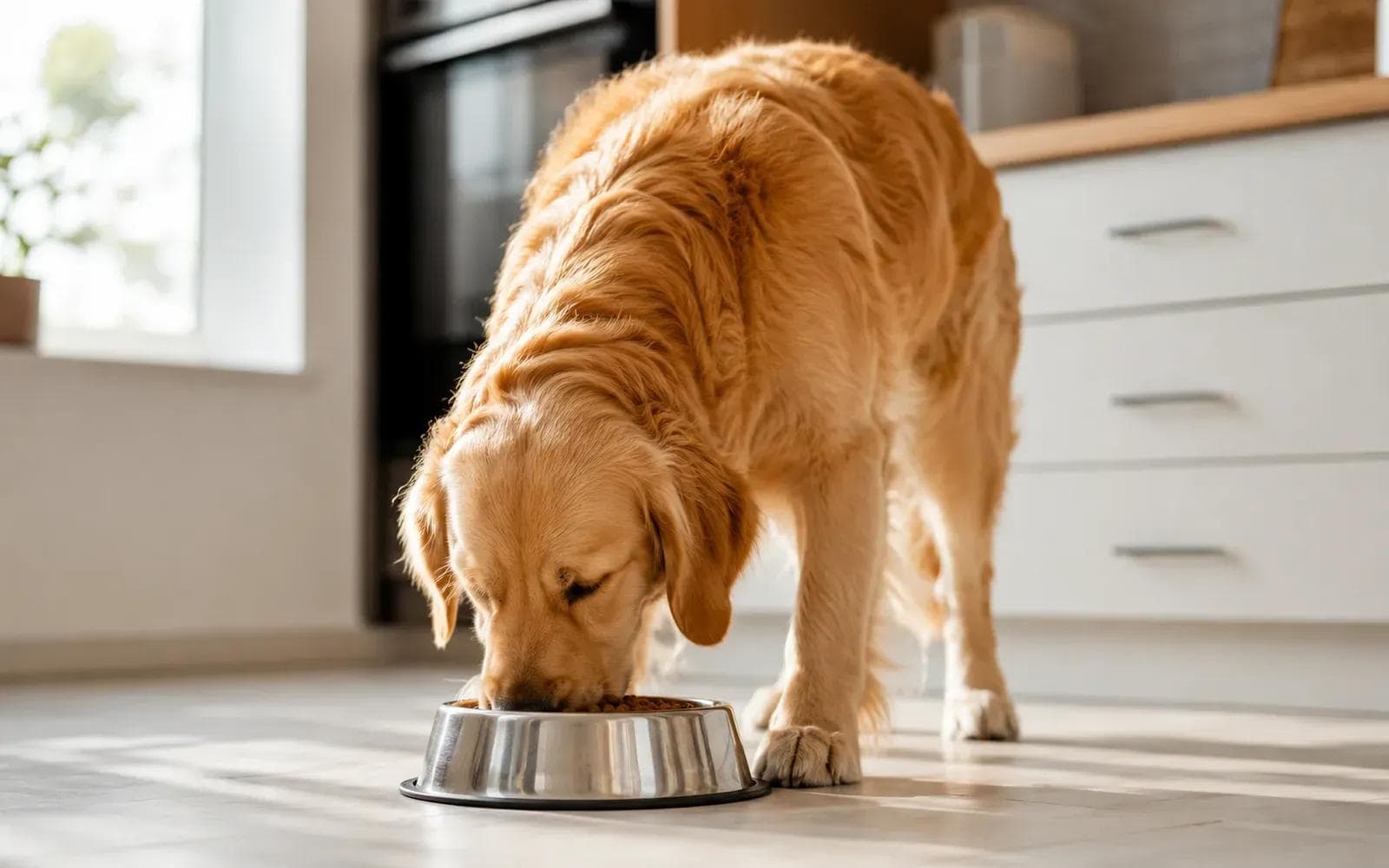
There is an extraordinarily simple instrument at the centre of petfood palatability science. A bowl. Sometimes two. We weigh the food before the animal enters. We put the bowl down. The animal approaches, smells, hesitates perhaps, begins to eat, stops, moves away, comes back, changes bowls, eats again and eventually leaves. We collect what remains and weigh it. Between those two weighings an astonishing amount of biology has happened, and at the end of it we are left with a wonderfully precise number. Grams eaten.
These methods have served the industry well. They are simple, reproducible and commercially meaningful, and if animals consistently eat more of one formulation than another, anyone developing petfood should want to know. I have relied on them, and I would rely on them again tomorrow. The point of this essay is not that the bowl is wrong. It is that the bowl is quiet about most of what it saw.
Because an empty bowl is a powerful commercial signal, and a powerful temptation. A food that goes uneaten has a problem, whatever its nutritional formulation, and I have argued throughout these Conversations that adequacy and acceptance are different problems. But we should be careful about what an empty bowl allows us to conclude, and the care begins with a fact so obvious it is easy to step over. Animals eat because eating is necessary. An animal needs energy and nutrients to stay alive, and hunger exists to make sure it goes and gets them. Feeding therefore sits at an awkward junction between physiological necessity and sensory reward, and a bowl weight cannot tell the two apart.
A dog that finishes its ration has shown that the food was acceptable enough to eat. It has not shown that the dog liked it, and the gap between those two statements is the whole of this essay. There is a difference between eating a thing, accepting it, preferring it and taking pleasure in it. The phenomena overlap, and we have a single word, palatability, that we allow to cover all of them, and then we let the measurement of the easiest one stand as evidence for the rest.
An empty bowl proves that food was eaten. It does not prove that food was loved.
So perhaps we are not only under-measuring palatability. Perhaps we are over-interpreting intake. And it is worth asking the question plainly, because the whole industry answers it a hundred times a day without pausing on it: when a bowl comes back empty, what exactly have we been entitled to conclude?
❦
Movement II · EATS TO LIVE
Here is the distinction the bowl cannot draw, and everything else follows from it. A pet must eat to live. But it may also eat because eating is rewarding, and sometimes an animal will take more than its immediate energy needs simply because the food is good. For analytical convenience these are often discussed as homeostatic feeding, the eating that answers a bodily need, and hedonic feeding, the eating that answers pleasure, although the underlying systems interact extensively rather than operating as two independent switches. Our difficulty is that the empty bowl records both at once and distinguishes neither. When we place a single food in front of a hungry animal, we are watching the homeostatic drive with the hedonic reward folded somewhere inside it, unseparated. The animal that clears the bowl has told us it was hungry enough to eat what was there. How much it wanted that particular food, as opposed to food, is a question the empty bowl leaves open.
The two-bowl test exists partly to close that gap, and it is a real improvement, because it introduces a choice. Put A beside B and let the animal decide, and now we can see how it distributed its eating, and which bowl it went to first. If A takes 70% and B takes 30%, we have good evidence that under those conditions the animals put more of their eating into A. We usually say A was preferred, and that is fair. But notice what the test did. It moved us from an absolute question, will you eat this, to a relational one, given these two, which will you eat more of. Preference now needs a comparator, and change the comparator and A’s apparent quality changes with it. A food can lose 40:60 against an exceptional rival and be entirely acceptable. Another can win 60:40 against a poor one while neither food stirs much enthusiasm at all. A preference test has no winner without a loser, and it still does not tell us the thing we might most want to know, which is how much the animal actually valued the food it chose.
And hunger is not a constant sitting politely outside the experiment. It is inside it. The animal arrives in a physiological state, hungry or nearing satiety, carrying a feeding history and a set of learned associations and a temperament of its own, and its metabolism is a participant in our test. A sufficiently hungry animal has a reason to eat before the question of attractiveness even arises, and as it eats and hunger fades, the balance between drive and food-specific reward shifts under us. Which raises an uncomfortable possibility. The first grams and the last grams of a meal may not mean the same thing. Nor need the first meal and the twentieth.
Hunger asks the animal to eat. Palatability helps decide what it wants to eat.
We need, then, to be disciplined about words, because there is a hierarchy hidden inside the one we use most loosely. Need is the baseline, the homeostatic pressure to eat at all. Acceptance is the animal’s willingness to eat this food rather than refuse it. Preference is how it divides its eating between alternatives when offered a choice. Wanting is how hard it will work to obtain one food over another. And liking, at the far end, is the hedonic question of pleasure that none of the others quite answers. Need, acceptance, preference, wanting, liking. The conventional bowl test observes the middle of that chain, acceptance and preference, and then quietly lets us infer rightward toward wanting and liking as though the steps were interchangeable. They are related. They are not synonyms, and the substitution of one for another is where a great deal of confidence has been manufactured. Later we will add a further construct the single meal cannot see at all, which is persistence, whether the animal still chooses the food after living with it, and that, it will turn out, is where the real disruption lies.
❦
Movement III · THE DIET THE ANIMAL NEEDS MOST
If intake and liking come apart anywhere, they come apart most violently in the one place the stakes are highest, the sick animal and the diet meant to save it.
Consider the cat with chronic kidney disease. The therapeutic renal diet is one of the genuine achievements of veterinary nutrition. In the landmark trial, cats that ate one lived a median of 633 days against 264 for cats that did not, and that is not a marketing figure, it is survival. But the formulation problem here is unusually constrained. The nutrients most central to managing the disease, phosphorus above all, cannot simply be raised when they happen also to support sensory appeal, and the protein that carries much of a diet’s phosphorus is moderated for the same clinical reason. Sodium is commonly kept low as well. None of this means palatability is impossible, and commercial renal diets are in fact engineered hard for acceptance. But it means the appeal has to be rebuilt inside a narrower nutritional envelope than an ordinary food enjoys, working around constraints an ordinary formulator never faces. The renal diet is, in large part by that necessity, among the harder foods in the category to make palatable. That is not an accident. It is the shape of the medicine.
Now feed it to the animal that needs it. The uraemic state that accompanies a failing kidney brings nausea and inappetence with it, and abnormal appetite is among the most commonly reported signs in these cats. So the very mechanism we have leaned on all along, the reliable hunger that empties a bowl and lets us read the emptiness as approval, is precisely the mechanism the disease takes away. The healthy dog at the fence may eat almost anything and hide the difference. The sick cat hides nothing, and will simply stop.
And the numbers from the clinic tell the story plainly. In that same survival trial, 21 of the 50 cats never reliably ate the diet at all, through limited intake or an owner unable to enforce the change. In a more recent survey of veterinarians, more than a third judged that the renal diet made up less than three-quarters of daily intake for most of their patients. On an intake sheet, a food that is mostly eaten reads as a formulation that mostly works. In the body of a cat quietly eating around it, it reads as a diet failing where it can least afford to, and a diet the animal refuses has, whatever the label promises, an efficacy it cannot deliver.
The healthy animal will eat to live and hide the difference. The sick animal hides nothing, and simply stops.
Intake is least trustworthy as a proxy for liking exactly where palatability matters most. Which leaves the clinician and the formulator holding an uncomfortable question. When the sick animal empties its bowl, or fails to, what have we measured, the food, or the disease?
We have been circling one half of the problem, the reading of the number, the way we let a gram of consumption stand for a measure of pleasure. Call that the interpretation problem, and it is real, and the sick cat shows how far it can go wrong. But over-reading the number is only the visible symptom, and beneath it sit two deeper faults that made the over-reading possible. We measure too little, because the test was built around what remains in the bowl rather than around the behaviour that emptied it. And we discard too much, because even the little we do capture is compressed, at the end, into a single figure. Three faults, then, stacked one on another. We measure too little, we discard too much, and we infer more than the measurement can support. The rest of this essay works down through those three layers, and then asks what we might build instead.
❦
Movement IV · WHAT WE MEASURE
Begin with the measurement itself, because the first fault is built into the instrument. Return to the bowl. Before, 400 grams. After, 137. The animal consumed 263 grams, and what happened between the 400 and the 137 is very nearly everything we wanted to understand, and the protocol was designed to capture almost none of it. That is the quiet radicalism of the standard test. If palatability is a behavioural response that unfolds through time, why is the experiment built around what remains in the bowl at the end?
Think about what the animal actually did. How quickly it oriented to the food and approached it, whether it went straight to the bowl or hung back, how long it sniffed, how long between the first sniff and the first bite. Then, as it ate, how fast, in large bouts or small, accelerating or slowing. Whether it withdrew its head and came back, or switched bowls, and how often. Whether it lingered or bolted. When the meal ended, and, most telling of all, whether it came back. The two-bowl test enriches the picture by adding a choice, and first choice is a second genuine observation, but the architecture underneath stays the same. It is built around consumption as the endpoint. We kept the last number because a balance is cheap, robust and objective, while behaviour is messy, individuals differ, and scoring video by hand took forever. The field measured what it could measure well, and there is a quiet danger in that, because whenever the instrument defines the science, what is easy to measure slowly becomes what we believe the thing to be.
We built the experiment around what was left in the bowl, not around the animal that emptied it.
And what we left out has a shape, a timeline that a single endpoint erases. Aroma acts before the tongue arrives. Taste needs contact. Texture emerges during chewing. Fat contributes scent and mouthfeel and a chemistry that shifts as it warms. Hydrolysates release their amino acids and peptides once the food is sampled. Post-ingestive consequences arrive later still, some of them hours later. These cannot all be acting at the same instant, so no single final weight can tell us which of them mattered. Picture the sequence instead, detection to orientation to approach to first bite to sustained eating to return, and palatability stops looking like a number and starts looking like a process. Two foods can reach the same 65:35 ratio, one by seizing the nose and then losing the animal, the other by a slower approach and a longer, steadier meal. Those are not the same response. One captured the sniff. The other captured the meal. The bowl weight cannot tell them apart, and to the person trying to build the food, the difference is the entire job.
There is a whole dimension the endpoint cannot even reach, borrowed from a field that has studied it far longer. Behavioural science separates the motivation to obtain a reward from the pleasure of receiving it, wanting from liking, and shows the two can be pulled apart. We cannot ask a cat to rate its pleasure on a scale, and we should not pretend the human words map cleanly onto an animal. But the distinction reframes the whole enterprise. Instead of asking how much an animal ate when food was simply there, we can ask what it will do to get one food rather than another. Will it travel farther, wait longer, work harder, keep choosing that food as hunger fades and an easier option sits beside it. That question separates the need to eat from the wanting of this particular thing to eat, and it is far closer to what we meant by palatability all along. And notice what it does not give us. Even effort does not finally hand us liking. It hands us something different, and arguably richer, which is how strongly the animal is motivated to obtain the food, and the fact that our best new question still cannot reach pleasure directly is quietly fatal to the idea that there will ever be a single perfect palatability meter. The bowl never asked even this much, because the bowl was never designed to.
❦
Movement V · WHAT WE DISCARD
Suppose, though, that the protocol never changed at all. Suppose we ran exactly the test we run today, the same bowls, the same 20 minutes, the same animals. There would still be a second fault, quite separate from the first, and in some ways more embarrassing, because it does not require any new experiment to see it. Even inside today’s test, the animal generates far more information than we keep.
Imagine a two-bowl session that ends 65:35. Underneath that ratio, if anyone were recording it, is a sequence. At 3 seconds the animal orients to A. At 7 it sniffs A, at 11 it sniffs B, at 14 it returns to A, at 16 it takes the first bite, and eats without pause until it disengages near a minute, wanders to B, samples it briefly, then comes back to A and settles. A continuous weighing trace shows exactly how much went down in each bout. The final ratio, 65:35, is not the data. It is a single summary statistic sitting on top of a rich and largely discarded stream. We ran a behavioural film and kept one still frame from the end.
The intake ratio is not all the data. It is the one number we kept from a film we mostly threw away.
This is a different charge from the first, and worth keeping separate. The first fault is that the experiment was built too narrowly, around the endpoint. This one says that even within that narrow experiment, we collapse most of what we do observe. And this is the fault that technology is genuinely placed to fix, not by measuring more, but by keeping what the animal already shows us. A camera does not tire at the twentieth session. Computer vision can follow approach and orientation and the whole dance around the bowl. Load cells under the station turn two weighings into a continuous intake curve. Identity chips separate one animal from another automatically. Microphones can register patterns of crunching, chewing and pauses that the final weight never records. Researchers have even begun coding the faces of cats and dogs the way expression is read in pain and affective-state work, though it is early and no one should oversell a feline grimace. A word of precision matters here, because this territory is often described loosely. We are not reading an animal’s mind or lighting up its brain. We are coding observable behaviour, the body and the face and the timing, and inferring a state from it, which is a far more modest and more honest claim. The behaviours the old test compressed, the sniff, the latency, the first bite, the bout structure, the return, are for the first time cheap to capture at scale.
But here is the discipline the whole essay turns on, and it is the most important sentence in it. More data is not more understanding. It would be the easiest thing in the world to bolt cameras and sensors and a machine-learning model onto the old test, generate a million measurements and learn nothing new. The question has to come first. What are we actually trying to know. Which behaviour carries information about it. Only then, which technology reads that behaviour reliably. Get that order wrong and we will have replaced an over-interpreted number with an over-engineered dashboard, and called it progress. Technology does not belong at the front of this story. It belongs in its proper place, between what we measure and what we understand, and never in the seat reserved for the animal.
❦
Movement VI · BEYOND THE BOWL
So what would we build. Not, at first, a new machine, and not the abandonment of anything that works. The encouraging part is that the field has already begun to move, and much of what the next generation needs is here or arriving. A recent review of the field put it plainly: the one-bowl and two-bowl tests tell us how much is eaten but give little understanding of why the differences arise, and the newer work is turning toward behaviour, affective state and the analytical chemistry beneath. The upgrade comes in two stages, and the order matters.
The first stage keeps the established test exactly as it is, and instruments it. Keep the balance, keep the one bowl and the two bowls, so that decades of accumulated comparison are not thrown away, and simply stop discarding the rest of what the animal does in front of them. Add the continuous weighing, the vision, the individual identity, the timing of the feeding sequence. This is conservative, it is deployable now, and it costs the field none of its history. Its real value is not only the richer picture it gives. It is that it generates the evidence needed for the second stage, because only once we can see which behaviours actually carry information can we know what a better experiment should be built to capture.
The second stage is the genuine disruption. Having learned which parts of the feeding event mean something, redesign the experiment around the biology rather than around the convenience of the balance. Build protocols that deliberately separate attraction from acceptance, acceptance from preference, preference from motivation, and the single meal from the durable choice made after weeks of living with the food. That last is not a refinement. It is the whole commercial question, because the repeat purchase happens long after the panel has gone home, and a food can win a bright acute preference and lose the animal by the twentieth bowl.
This is also the point where artificial intelligence earns its place, and it is not the place it is usually given. The value is not a model that predicts a palatability score, which would only rebuild the old compression with more machinery. It is the fusion of streams that were never before brought together: the behaviour through time, the continuous intake, the identity of the animal, its previous exposures, and the measured chemistry and physics of the food. Bring those into one frame and we can stop asserting in advance what palatability is and let the data show us its structure. Perhaps there are foods that are high in attraction and poor in persistence, and others that are quiet at first and strong on return, and others that carry a hungry animal and collapse in a satiated one. Those categories should not be declared before the evidence exists. But an analysis that lets the dimensions emerge from the animal’s own behaviour is a different enterprise from one that decides beforehand that everything must fold into a single word.
And here the old question itself begins to fail. We ask whether food A is more palatable than food B as though palatability were a single property, like moisture or protein, sitting in the food waiting to be measured. But suppose one food is thrilling at the nose, ordinary once eating begins and tiresome within a week, while another attracts less sharply, carries a meal beautifully and grows more preferred with familiarity. Which of them is more palatable. The honest answer is that the question has quietly folded several different biological phenomena into one word, and then asked a single number to carry all of them. The future is not a more accurate palatability score. It may be a palatability signature.
We have been asking which food is more palatable as though palatability were one thing. It may be several.
There is a second thing the old average hides, and it needs no new technology at all to see, only honesty about what a mean is. When a panel prefers A 60:40, that figure can mean most animals individually chose A in roughly that proportion, or it can mean half the animals strongly preferred A while half were indifferent or leaned the other way. The number on the report is identical while the underlying populations are entirely different. So the sharper question is not whether the panel preferred A. Did most animals prefer A, or did the average animal, which does not actually exist, prefer A? Once the identity chip and the camera let us follow the same animal across weeks, that question opens all the way up, and the interesting thing stops being that dogs preferred A 63:37, and becomes whether a given dog is consistent, whether one animal always responds to volatile attraction and another switches after 3 exposures, whether this cat approaches fast but ends meals early and that one refuses an unfamiliar food at first and comes to prefer it. The population mean washes all those trajectories together into a single ratio, and there is no average animal eating an average bowl beside the average owner buying the average bag. Longitudinal, individual phenotyping was economically impossible with a human scoring a panel by hand. It is not impossible now.
Tie those behaviours back to the chemistry and physics of the food, the volatiles associated with the approach, the lipid chemistry associated with sustained or declining engagement, the peptides that meet the tongue, the texture encountered during the chew, and the question stops being which palatant won and becomes why it won, when it won, and whether it will still win tomorrow. This is where the whole series converges. When a novel protein or a fermentation ingredient underperforms, the useful question is no longer simply whether the animal will eat it. It is where in the feeding sequence the unfamiliar ingredient does its damage. Does it dull the attraction, or is the attraction fine and the meal falls apart halfway through, or does the palatant rescue the first bite while the base formulation loses the animal by the twentieth. The Conversations on fats and plasma and hydrolysates were all, in the end, about single points along this sequence. A richer measurement is what lets us tell those points apart. There is a warning folded in, because a model trained on yesterday’s ingredients may not understand tomorrow’s proteins, and a fermentation product or a novel fat can sit outside the chemical space the model learned. The technology does not abolish the biology. It gives us another way to interrogate it, and the animal keeps the final vote.
Earlier I set out need, acceptance, preference, wanting and liking as a hierarchy, a ladder climbing from survival toward pleasure. Beyond the bowl, even that looks too neat. They behave less like rungs than like dimensions, interacting, sometimes moving together and sometimes pulling apart. An animal can want a food intensely and eat little of it because satiety has arrived, or accept a food for weeks without ever preferring it, or prefer one for its novelty and abandon it once the novelty is gone. Add attraction, meal engagement and persistence, and what we have been calling palatability stops looking like a score at all and starts looking like a signature. The essay began by finding a hierarchy hidden inside one loose word. It ends by finding that even the hierarchy was too simple.
I will not, in this essay, walk through how those signals are assembled into a working answer, because that assembly is the work itself, the point where the science stops being a public conversation and becomes someone’s craft. The lighthouse can be described without handing over the map. But the thing the whole essay has been driving toward is simpler than any method. These signals are not unmeasurable. They are merely unmeasured by the standard test. The animal has been producing them all along, at every session, in plain view, and they disappeared not because they were invisible but because we were weighing the bowl.
None of which makes the bowl primitive. Sometimes the simplest measurement is the right one, and if I were launching a food tomorrow I would still want to know, plainly, whether animals eat it and whether they prefer it to what it replaces. But scientific maturity is knowing what a measurement cannot say. Intake is real, preference is real, first choice is real, and the danger begins only when we quietly enlarge them into something bigger than the behaviour we watched. The bones disappeared over the fence. The test food disappeared in the panel room. Both left the same evidence, an empty vessel and an animal that ate what was there, and the biology that emptied them was not necessarily the same. That difference, invisible on the balance, is the whole of it. A pet eats, in part, because life requires eating, and folded inside that necessity is everything else, attraction and choice and reward and persistence and learning, and something that in plain language we would call liking. For decades most of it vanished between the first weighing and the second. It did not vanish for the animal. It vanished for us.
So the question I would leave open is not whether the bowl was wrong. It was not. It is whether we are still willing, now that we can see so much more of the meal, to keep asking the animal only the one question the balance was built to answer. I do not think we should be. But that is a decision the industry has to make with its eyes open, and it has not yet, to my knowledge, even been put as a question.
We measure too little, we discard too much, and we infer more than the measurement can support.
The empty bowl has told us a great deal. It is time we found out what happened beyond it.
References
1. Aldrich, G.C. & Koppel, K. (2015). Pet food palatability evaluation: a review of standard assay techniques and interpretation of results with a primary focus on limitations. Animals 5(1):43-55. doi:10.3390/ani5010043
2. Tobie, C., Péron, F. & Larose, C. (2015). Assessing food preferences in dogs and cats: a review of the current methods. Animals 5(1):126-137. doi:10.3390/ani5010126
3. Calderón, L.A., Berendsen, B., Verbeek, E. & others (2024). Measuring palatability of pet food products: sensory components, evaluations, challenges, and opportunities. Journal of Food Science 89(9):5359-5382. doi:10.1111/1750-3841.17511
4. Elliott, J., Rawlings, J.M., Markwell, P.J. & Barber, P.J. (2000). Survival of cats with naturally occurring chronic renal failure: effect of dietary management. Journal of Small Animal Practice 41(6):235-242. doi:10.1111/j.1748-5827.2000.tb03932.x
5. Magalhães, T.R., Lourenço, A.L., Corbee, R.J. & Queiroga, F.L. (2023). Clinical management of feline chronic kidney disease in Portugal: a questionnaire-based study. Journal of Feline Medicine and Surgery 25(11):1098612X231206125. doi:10.1177/1098612X231206125
6. Berridge, K.C. & Robinson, T.E. (2016). Liking, wanting, and the incentive-sensitization theory of addiction. American Psychologist 71(8):670-679. doi:10.1037/amp0000059
❦
About the Author
Dr. rer. nat. habil. Dr. Seronei Chelulei Cheison is the founder and Chief Executive Officer of Sinonin Biotech GmbH, where he works with petfood companies on palatant sourcing strategies, the innovation of palatability enhancers, and the design of palatability assessment. A trained food enzymologist, he led alternative protein and palatant development at Mars Petcare before founding Sinonin, and his research on protein chemistry spans two decades, a doctorate from Jiangnan University, and a habilitation from the Technical University of Munich.
❦
Sinonin Biotech GmbH is a partner in the ZEST project (Grant Agreement No. 101157382) and the PROSCALE project (Grant Agreement No. 101288362), both funded by the Circular Bio-based Europe Joint Undertaking (CBE JU) under the European Union’s Horizon Europe research and innovation programme. Views and opinions expressed are those of the author only and do not necessarily reflect those of the European Union or CBE JU. Neither the European Union nor the granting authority can be held responsible for them.
- animal behaviour
- Cat Nutrition
- feeding behaviour
- food intake
- palatability testing
- palatants
- pet food formulation
- pet food palatability
- Pet Nutrition
- renal diet
- Sensory Science
- two-bowl test